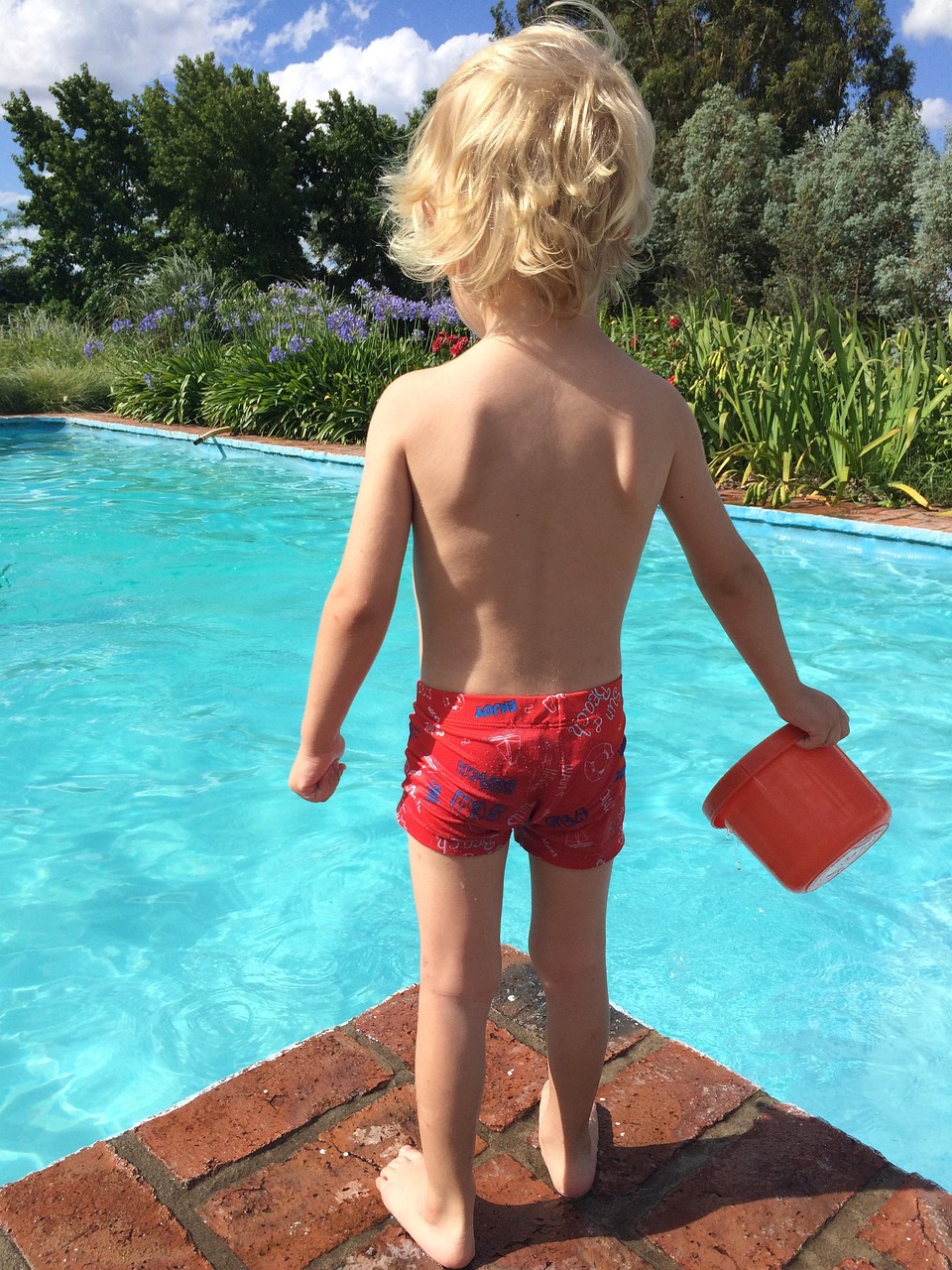
My nephew stood on the edge of the pool, dripping wet, with his teeth chattering, and twig-like arms folded into his bird chest. His eyes danced between my mom and dad in a state of total shock and confusion.
“You’re soaking wet, don’t go inside,” my mom said. “We are cleaning the pool later today, you can just pee in the pool”, my mom said.
Cici, as my nephew calls my mom, had lost her mind – at least according to my nephew, as he stopped, turned around to cut his eyes at her, and kept walking towards the house (and indoor bathroom).
“No! Don’t go inside wet. Come here!”
He reluctantly turns around and walks back towards his Cici, even more confused as she repeats, “You’re too wet to go inside. You can pee in this pool, just not any others.”
He looks towards his Pop-pop, half for approval, half wondering how long they’re going to commit Cici for this insanity. With an affirming nod from Pop-Pop, my nephew returns to the edge of the pool, pulls his bathing suit to his ankles, and pees into the pool.
We Talk with More Than Our Words
Words matter, and how we communicate with each other is critically important in navigating our daily lives.
However, communication goes far beyond verbal words. Think of all the ways my nephew was communicating his situation (and how crazy he thinks Cici is). His body language noted he was cold and uncomfortable. His movement of walking towards the house told you where he was going.
His eyes, glances, and general facial expressions communicated his thoughts and feelings. Did you notice my nephew never actually speaks, but he was clearly communicating? Even with all this communication, things still got lost!
As a behavior analyst, understanding communication is a fundamental part of my professional work of serving people with intellectual and developmental disabilities. However, the lessons learned from working with this population can teach us all how to better understand and communicate with ourselves, our partners, friends, and coworkers. If communication involves so much more than just words, listening is not the only thing we need to do to be better communicators.
Communication tips for better understanding others, but also knowing what you are telling others.
- Body language: What does their body language communicate to you? What is your body language communicating?
- Body movement: Are the people communicating moving in their environment? Where are they positioned in a room? Are they gravitating towards items, people, activities, or settings?
- Do you know the person? Do you know what “happy” looks like for them? What about sad or angry? Recognizing and respecting a person’s baseline and the changes from this can be an important way to understand them.
- Eye contact and facial expressions. A person’s eyes and facial expressions can communicate current emotions and general status, but also are indicative of rapid changes in mood and feelings.
All of Ley’s work is original and no form of AI was used to write this blog.
Never disregard professional medical advice or delay seeking medical treatment because of something you have read in this article.
0 Comments